
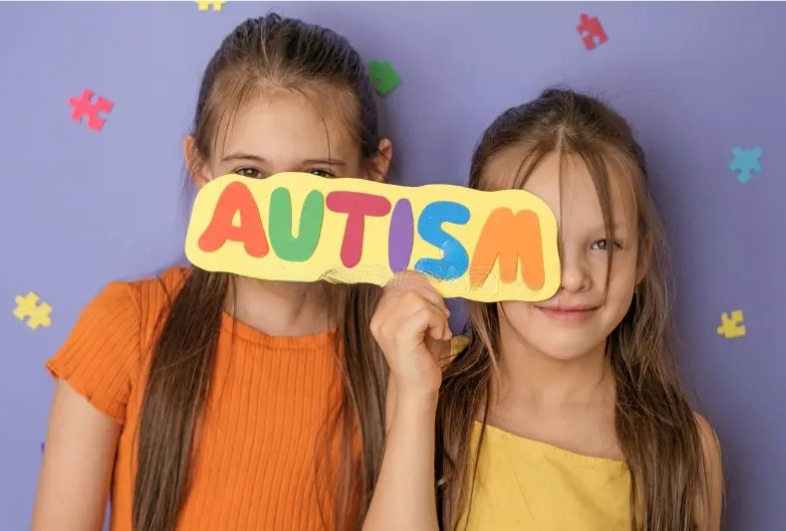
She is the quiet one in class. She has one or two close friendships that mean the world to her, until they suddenly fall apart. She holds herself together beautifully all day at school, then melts down the moment she walks through the front door. She might be described as shy, sensitive, a bit of a daydreamer. Or she might be autistic, and simply very, very good at hiding it.
Autism in girls is one of the most missed things in our field. Girls are diagnosed later than boys, if they are diagnosed at all, and here in South Africa clinicians are increasingly raising the alarm about just how wide that gap has become. The result is thousands of girls growing up feeling that everything is harder for them than it seems to be for everyone else, without ever understanding why.
Let us talk about why this happens, and what to look for.
The art of masking
The single biggest reason autistic girls are missed is a survival skill called masking.
Masking is the exhausting, invisible work of appearing to fit in. Many autistic girls become expert observers. They watch how other children speak, laugh, stand and play, and they copy it. They rehearse conversations in their heads. They swallow their discomfort in noisy classrooms and busy playgrounds and save the overwhelm for home, where it feels safe to let go.
From the outside, a girl who masks well looks like she is coping. On the inside, she is running a marathon every single day. And because the struggle is hidden, the people around her often have no idea it is happening.
The picture we have is based on boys
There is a second problem, and it sits in the very way we understand autism.
Much of the research, the checklists and the popular image of autism were built around boys. So when we picture an autistic child, many of us picture a boy who lines up his toys and does not make eye contact. Autistic girls often present differently, so their signs get quietly explained away. She is not autistic, she is just shy. She is not struggling, she is just sensitive. She is away with the fairies again.
Each of those gentle labels is a door closing on the support she might have had.
The signs that get missed
Autism looks different in every child, and there is no single checklist that fits everyone. But there are patterns that are often overlooked in girls. These can include:
• Intense friendships that feel all-or-nothing, and are painful when they break
• Holding it together all day, then releasing big emotions at home where it is safe
• A deep, focused passion for a particular subject, animal, book or hobby
• Strong sensitivity to sounds, lights, textures, tastes or smells
• Real exhaustion after socialising, and a deep need to recharge alone
• Copying other children closely in order to fit in
• Anxiety, perfectionism or a fear of getting things wrong
None of these on its own means a child is autistic. But a cluster of them, especially alongside that sense that daily life is simply harder for her than it should be, is worth paying attention to.
The cost of being missed
When a girl is missed, she does not stop struggling. She just struggles without a name for it.
Many undiagnosed autistic girls grow up believing there is something wrong with them, rather than understanding that their brain simply works differently. The constant effort of masking can take a real toll on their confidence and wellbeing over time. A diagnosis, when it finally comes, is so often met not with sadness but with relief. At last, an explanation. At last, permission to stop pretending.
That is why noticing matters so much. Understanding does not label a child. It frees her.
What you can do
If a girl in your life is finding the world harder than she should, the most powerful thing you can do is simple. Trust what you are seeing, and ask the question.
Talk to her school. Speak to a professional who understands how autism presents in girls specifically. Keep a note of the patterns you notice, in different settings and at different times of day. You know your child better than anyone, so if your instinct is telling you something, honour it.
And whatever you learn, keep meeting her exactly as she is. No child should ever have to mask to be accepted.
At C.A.R.E. we walk this road with families every day, and we are always happy to talk it through. Reach us on info@thecarecentre.co.za or 010 006 5586.
She is not a puzzle to be solved. She is a person to be understood.
*This article is for general information and support. It is not a diagnosis. If you have concerns about your child, please speak to a qualified professional.*
